λ (car contracts)
A handheld terminal you play and program.
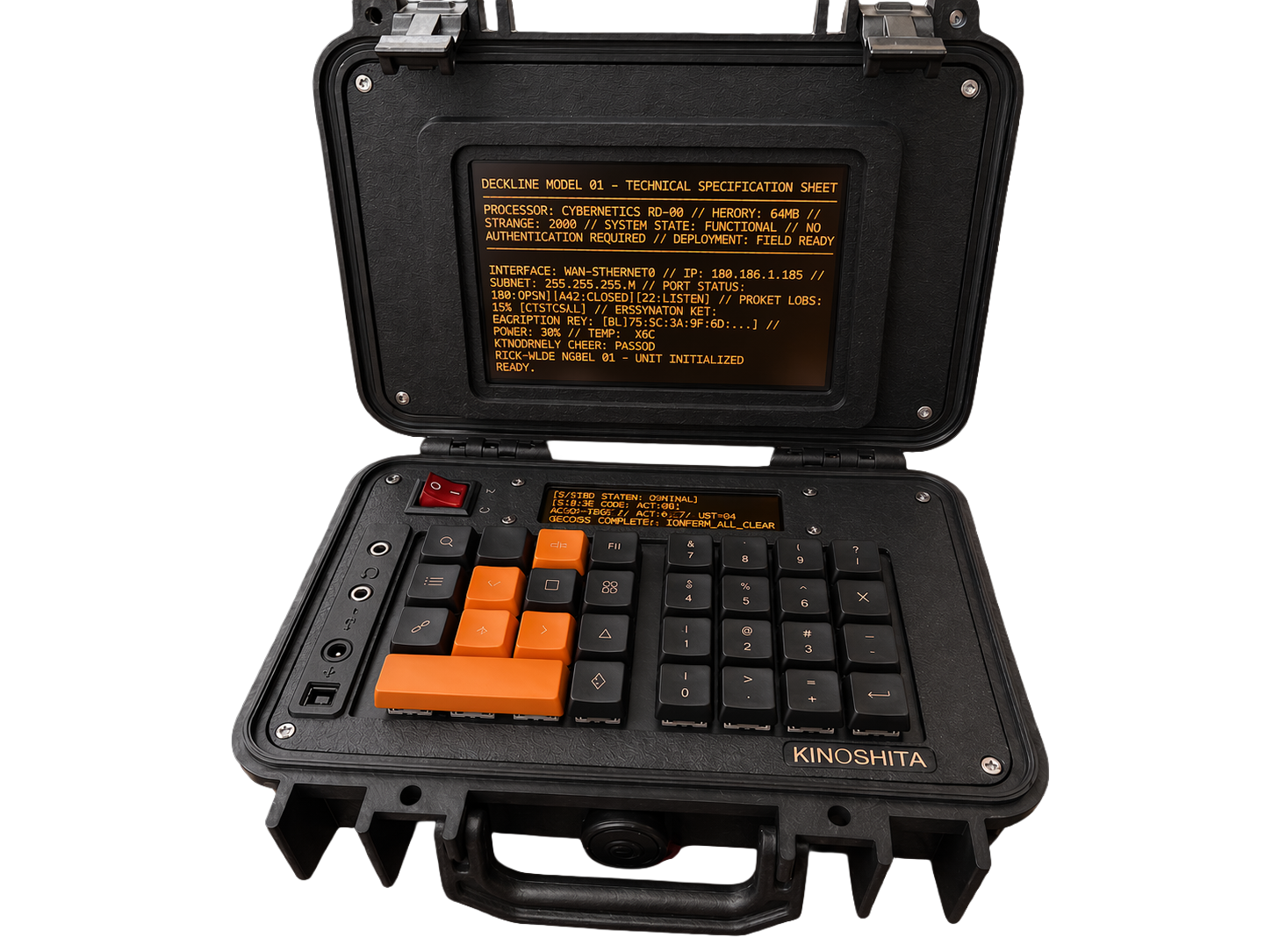
A portable cyberdeck: a split mechanical keyboard, a 7-inch amber display, and a second OLED strip that carries the deck’s status and voice. Slot a cartridge to run missions: network intrusion, forensic accounting, sonar recon. Or hit TERM for a live KEC Lisp prompt and write your own. A desktop emulator runs the whole thing on macOS and Linux.
Built by Great Western Productions
You run contracts as an operator
The deck runs a mission board, and it generates every contract to fit you: the capabilities you carry, your reputation, your history, and a seed. Clear a contract and you earn credits and reputation. Reputation opens harder work. Credits upgrade the programs you work in.
[01] Play it
Slot a cartridge and take the contract. Map a network and break its ICE. Trace a shell company through a forensic ledger. Run a drone to a wreck in deep water. The deck tracks your credits and reputation across every job.
[02] Program it
Press TERM for a live Lisp prompt and write your own missions. Cartridges run on KEC Lisp, the open-source language built for the deck.
Four launch cartridges
A cartridge is a capability: it teaches the deck a new domain and feeds fresh contracts to the mission board. Slot one to play it. Swap mid-contract for a job that crosses more than one.
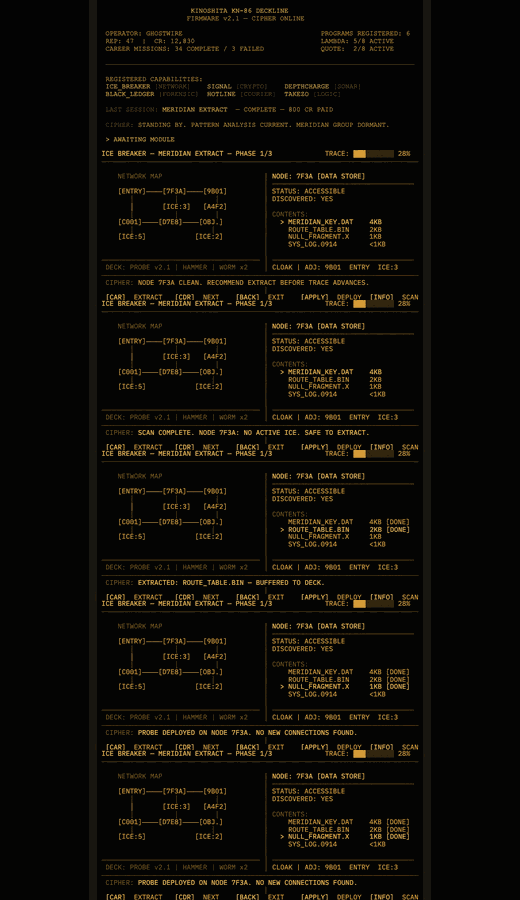
MODULE 0x01 · Network Intrusion
ICE BREAKER
Recon a network, map its nodes, break the ICE, and carry the data out. The flagship, and the cartridge in the box.
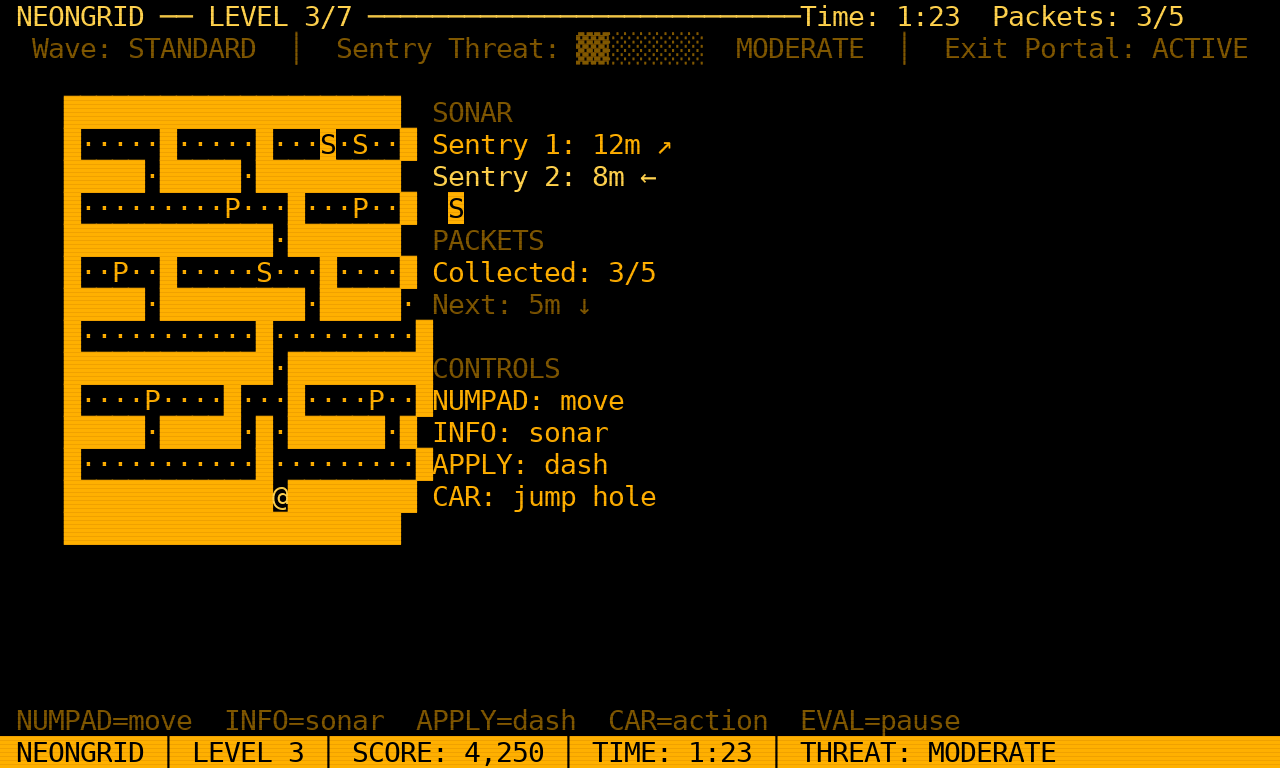
MODULE 0x02 · Grid Traversal
NEONGRID
The title that teaches the deck. Learn its key grammar through navigation drills, then keep it slotted as a permanent utility.
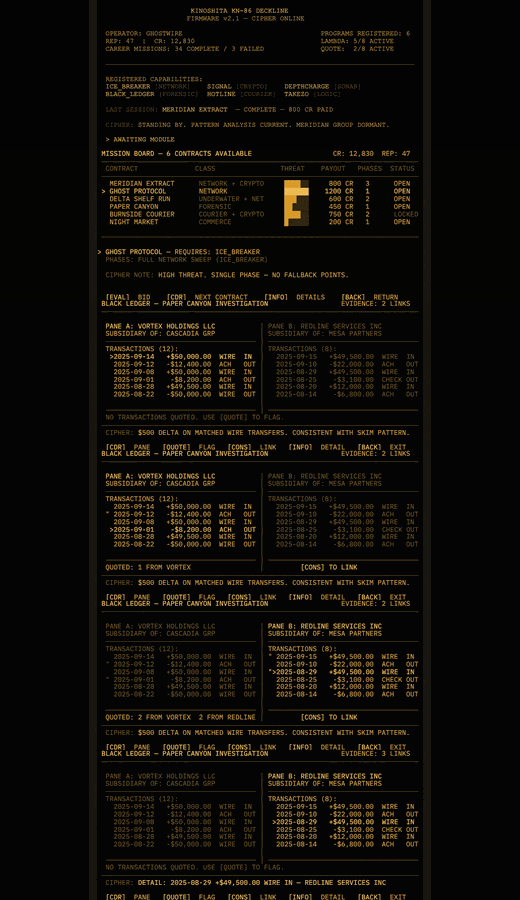
MODULE 0x03 · Forensic Accounting
BLACK LEDGER
Trace money through shell accounts, reconstruct deleted transactions, and map who really owns what.
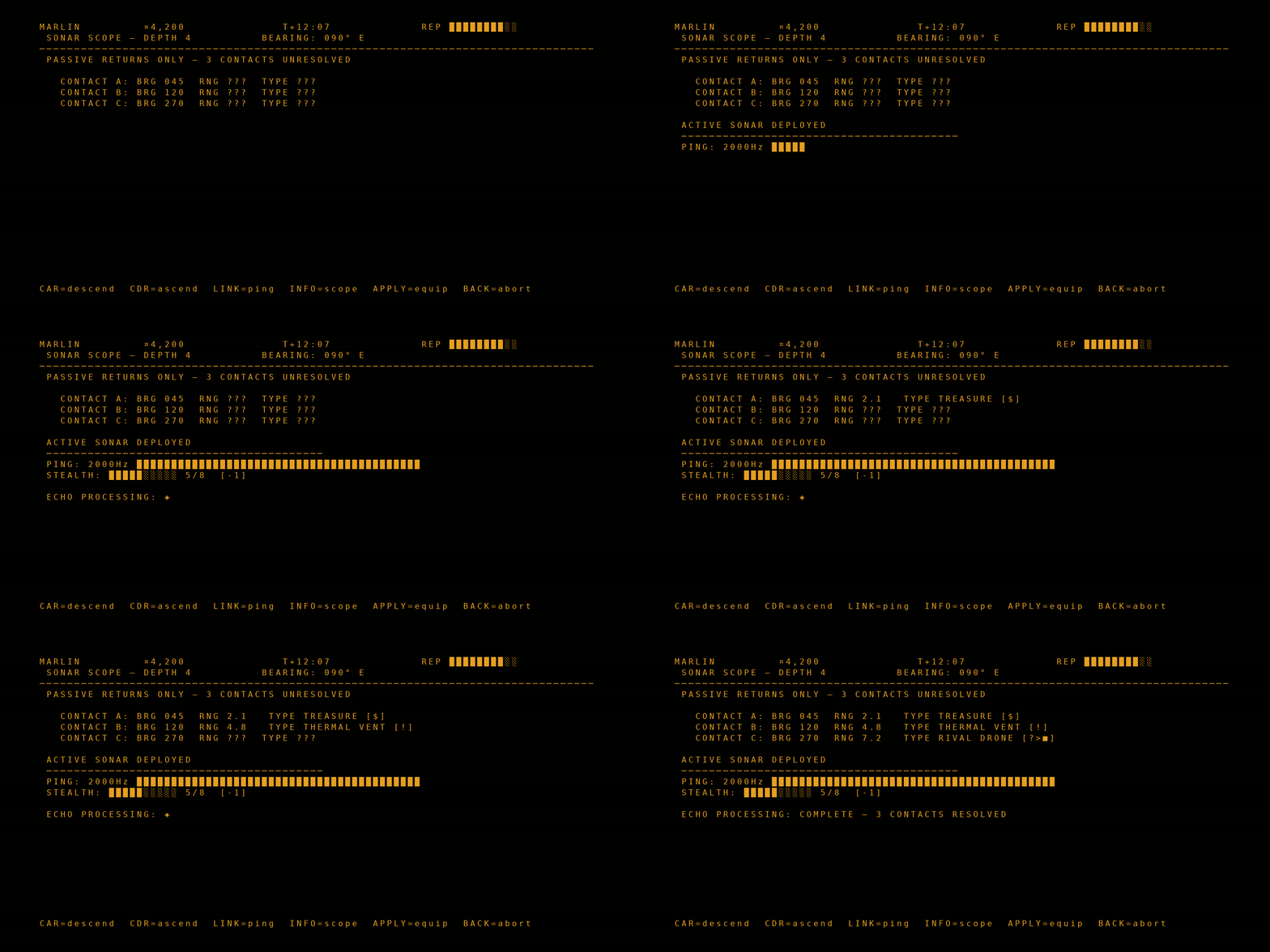
MODULE 0x04 · Maritime Recon
DEPTHCHARGE
Pilot a drone down a sonar contact tree, salvage the wreck, and slip past what is listening below you.
Set in the Amber Circuit
The KN-86 runs in the Amber Circuit, the operators’ name for the work: a touring route of contracts you take for scratch and standing. A government ID unlocks everything legitimate, and operators are the people who lost theirs. The deckline is the one economy that still hires them. The company behind it watches the whole mesh.
The world carries a novelette on Kindle and a soundtrack on YouTube.
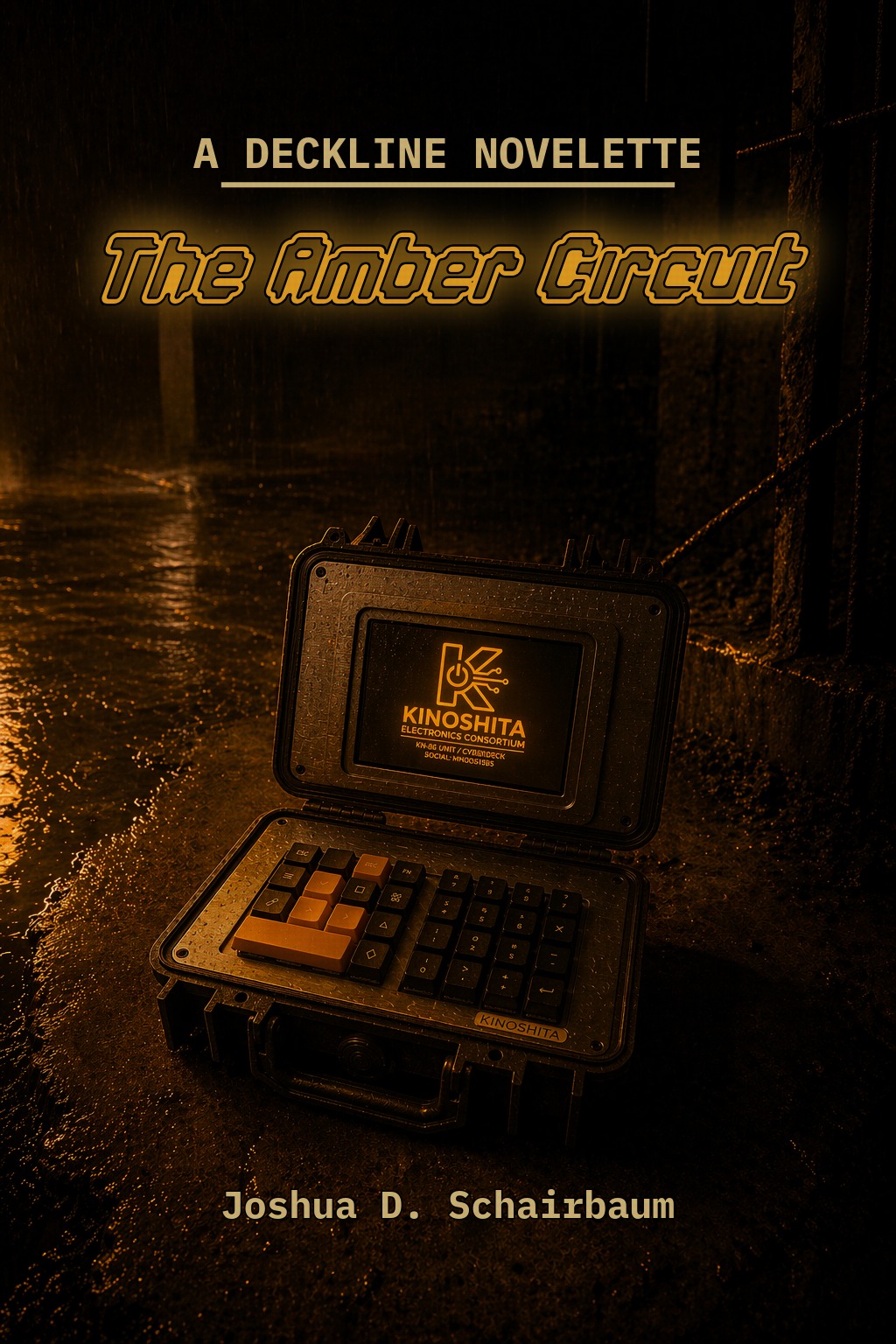
THE NOVELETTE · READ ON KINDLE
It’s Real Hardware
The prototype is on the bench: switches soldered, display lit, firmware running.
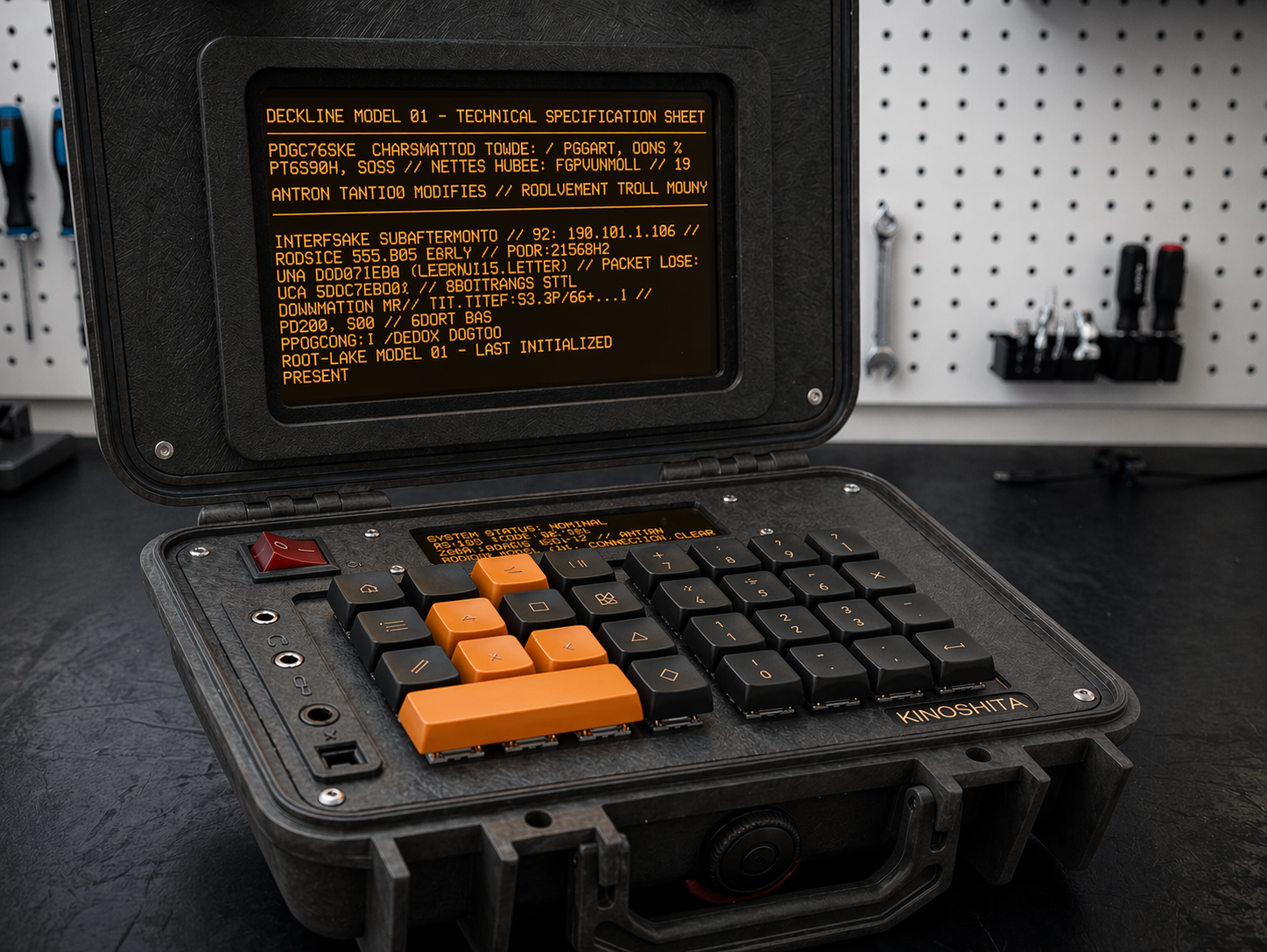
The CIPHER-LINE OLED strip sits above the keyboard: status, CIPHER fragments, and contextual meta.
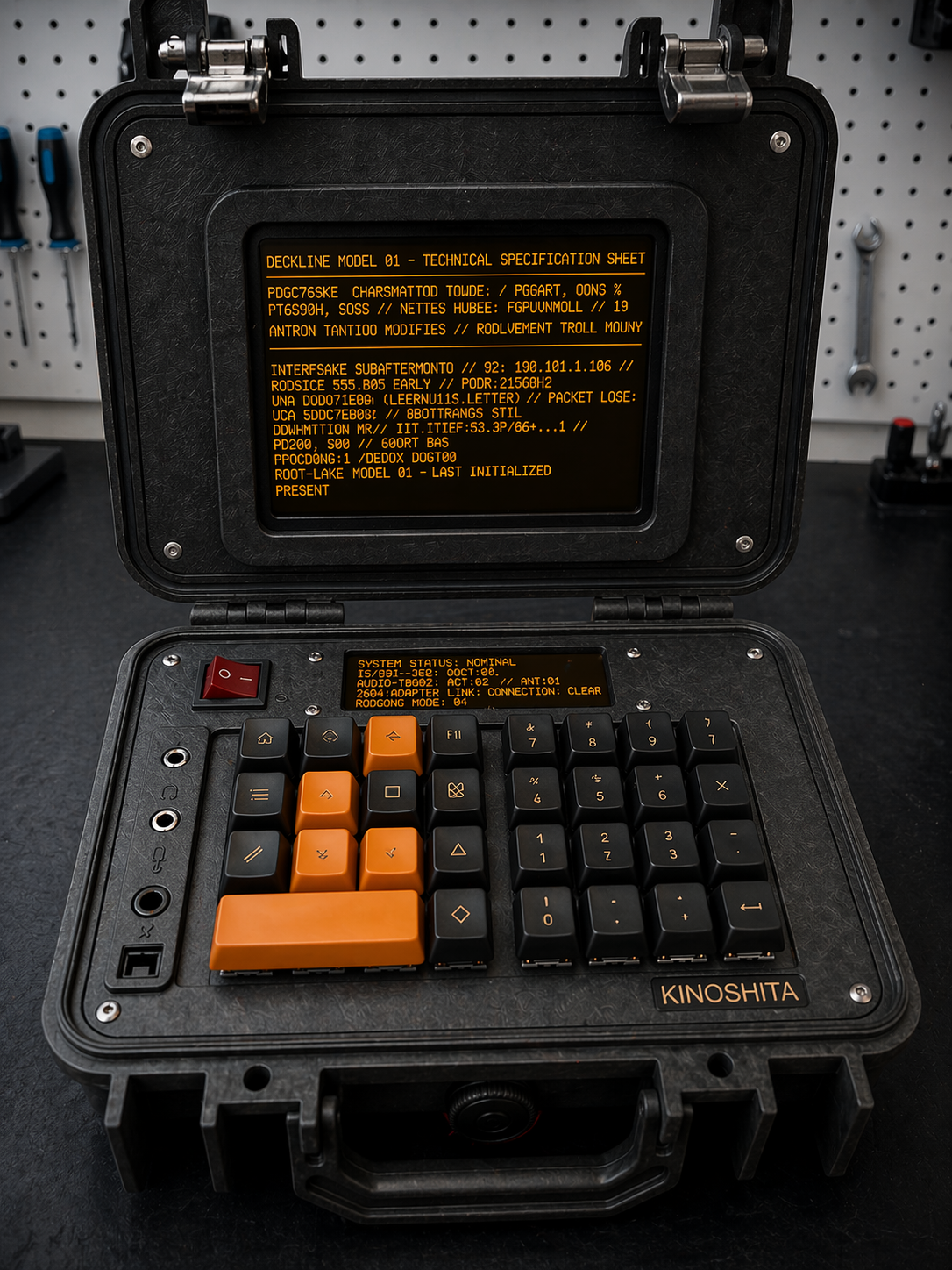
Pelican 1170 shell, main display, CIPHER-LINE, and key plate.
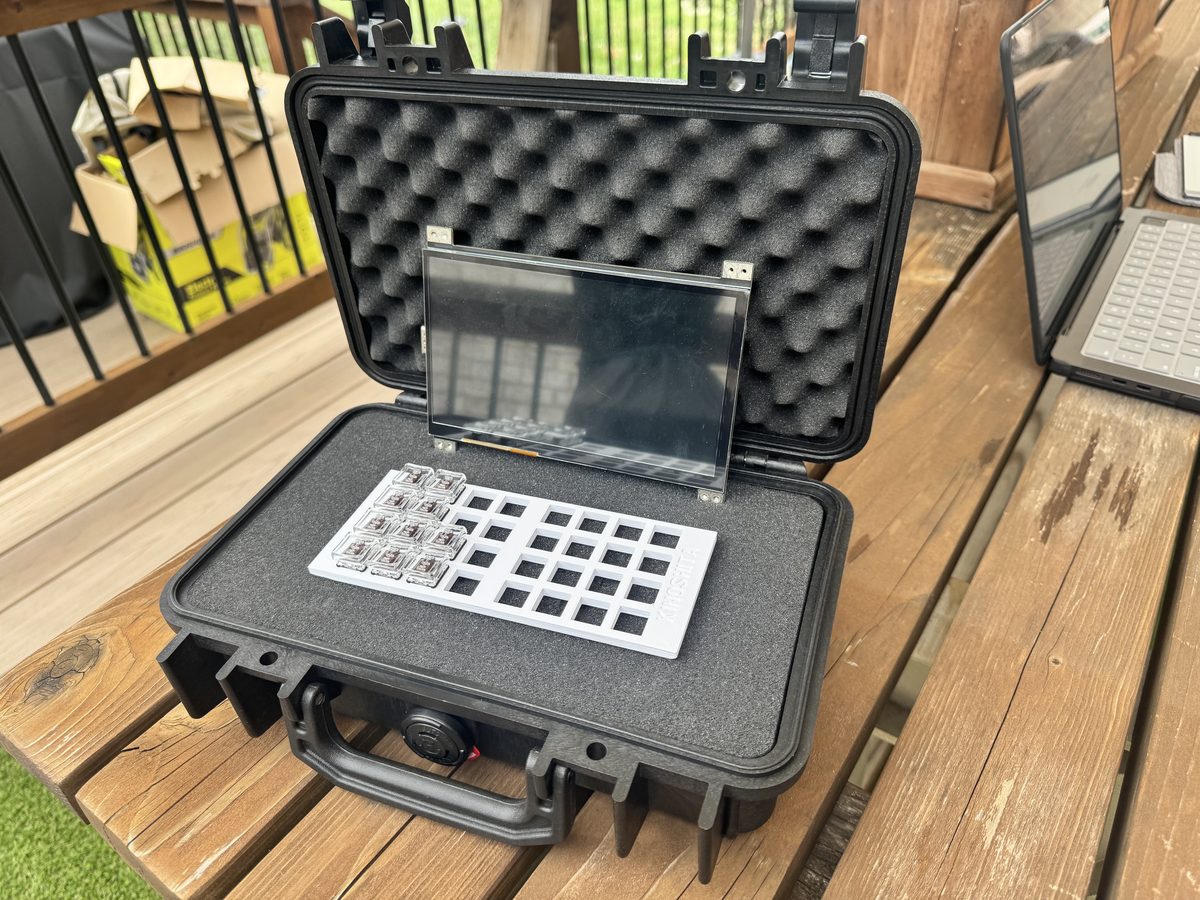
Kailh Choc switches on a 3D-printed plate, an earlier bench rev; the board is now a 34-key split.
Look closer
Three surfaces, three pages: the split keyboard, the on-deck software, and the CIPHER-LINE.
/keyboard
Split Keyboard
34 keys across two halves — 14 Lisp-primitive keys on the left, a T9-style digit pad on the right, and a trackpoint on each side. Hot-swap Kailh Choc v1, MBK keycaps, QMK.
/software
On-Deck Software
A live KEC Lisp REPL, a structural editor, and the runtime itself on the deck out of the box. Write and run your own. CAR selects, CDR traverses, CONS binds.
/cipher-line
CIPHER-LINE
256×64 yellow OLED above the keyboard. Four rows. The cartridge does not write here.
Built in public
I build the KN-86 in the open and write it up as I go. The Field Dispatch is the record, and every issue lands here. Join the list to get the next one by email.
TRANSMISSION 04 / 15.06.26
I open-sourced the language I made for the deck.
KEC Lisp goes public: a small Lisp built on Fe, with a core, a standard library, and a CLI you can run on your laptop today. Plus why Lisp, and a note about fun.
TRANSMISSION 03 / 08.05.26
New keys, new music, and the world behind both.
The custom Lisp keycaps arrive. Idleware starts releasing a track every Friday. And the bigger project behind the device gets a name: Kinoshita World.
TRANSMISSION 02 / 01.05.26
Attract mode: a love letter to the empty store shelf.
An essay on what a 1988 machine does when nobody is looking, the .kn86clip format, and the four launch reels the deck plays in the dark.
TRANSMISSION 01 / 24.04.26
The deck starts talking to itself.
The first dispatch. Attract mode ships, the font gains 161 glyphs to form the KN-86 Code Page, and a pirate broadcaster named Marty Glitch enters the docket.
Frequently Asked Questions
Sign up for field dispatches on firmware builds, hardware sourcing, cartridge design, and launch timing.
Three Channels
Three ways to follow the build. Pick one, or take all three.
[01]
THE FIELD DISPATCH
The build log, mailed. What shipped on the device, what the fiction is doing, and one piece of design work per issue. Sent on Fridays when there is something to say.
> JOIN THE LIST[02]
IDLEWARE
The deck’s soundtrack. Cyberpunk trip-hop chiptune, slow and instrumental, released under a name from the fiction. New track every Friday, with visuals in the same amber terminal style as the deck.
▶ LISTEN ON YOUTUBE[03]
THE AMBER CIRCUIT
The first Deckline novelette. Wreck has 180 credits, three days of rent, and a device that shouldn’t still exist. Gibson-influenced cyberpunk noir, about 12,000 words.
> READ ON KINDLEThe KN-86 Deckline is being built in public. Subscribe for development updates, launch details, hardware notes, and cartridge previews.